Governance is how the force stays usable.
AI governance should not become a policy tomb. It should answer daily operational questions clearly enough that people can move fast without losing control.
Contempo builds governance into the workflow: data handling, human review, documentation, escalation, continuity, and management reporting.

Human-in-the-loop control model
AI can help with motion, but authority stays visible. The model separates machine assistance from human ownership.
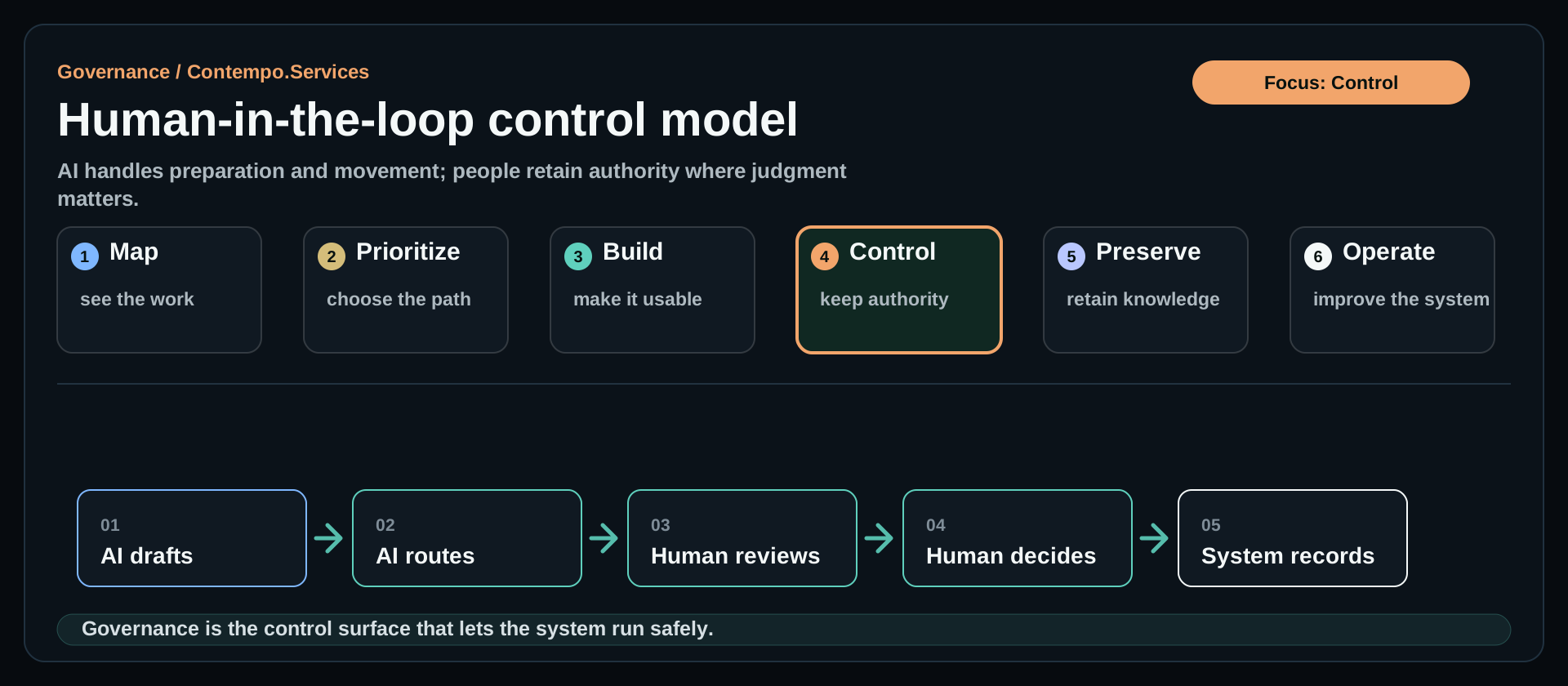
AI assists
- Draft
- Summarize
- Classify
- Compare
- Route
Humans own
- Approve
- Correct
- Escalate
- Decide
- Accept risk
System records
- Source
- Prompt
- Output
- Review
- Next action
Questions governance should answer
- Which AI tools and workflows are approved, restricted, or prohibited?
- What data cannot be pasted into external tools?
- Which outputs require human review before use?
- Who owns corrections, mistakes, and final decisions?
- What prompts, outputs, decisions, and lessons should be preserved?
- How does management monitor adoption, quality, and drift?
Governance products
AI use policy
Allowed, restricted, and prohibited use cases written for real work, not legal theater.
Data and context rules
Plain guidance for client data, internal records, account details, and confidential material.
Review and escalation model
Requirements for checking outputs, approving use, correcting failures, and escalating risk.
Operations management cadence
Metrics, reporting, ownership, improvement backlog, and maintenance rhythm.
Useful standard: if the business cannot explain how AI is being used, who checks the result, and where the knowledge goes, the workflow is not mature yet.