Automate the repeatable drag, not the judgment.
Good automation starts by mapping the actual process: trigger, inputs, decisions, exceptions, ownership, output, record, and recovery path.
From there, Contempo designs what should be routed, drafted, summarized, checked, reported, archived, or escalated.

Automation candidate scorecard
A workflow should earn automation. The best candidates score well across practical, operational criteria.
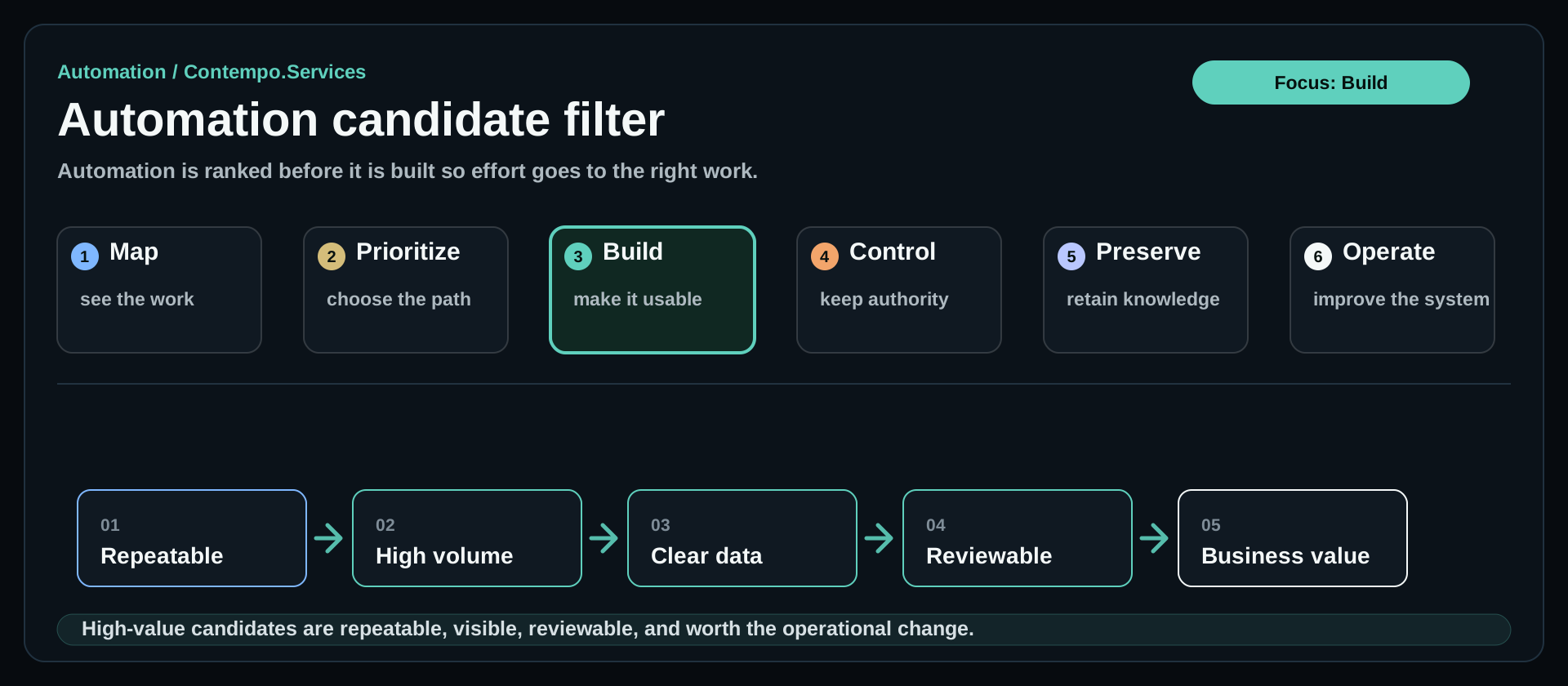
Strong automation candidates
Intake routing
Turn form submissions, emails, or requests into structured records and next-step queues.
Documentation drafts
Convert notes, tickets, meetings, and project fragments into clean internal documentation.
Status reporting
Summarize operational state, project movement, or issue patterns into repeatable briefs.
Content workflows
Move from idea to outline to draft to review without losing source context.
Knowledge cleanup
Organize scattered files, prompts, SOPs, and project notes into a usable structure.
Decision prep
Collect facts, compare options, list tradeoffs, and prepare a recommendation for review.
What the automation plan answers
- What starts the workflow?
- What information is required before the system can act?
- Which steps can AI assist with safely?
- Where does a human approve, reject, or correct?
- What output should be saved, sent, transformed, or escalated?
- How does management know the workflow worked?
Management priority: automation should make the business easier to run, not harder to understand.