Make the system visible. Then channel the force.
Contempo work starts with operational reality. Before recommending tools, automations, agents, or policies, the work needs to show what is actually happening: who does the work, what information moves, where decisions happen, what breaks, and what knowledge must survive.
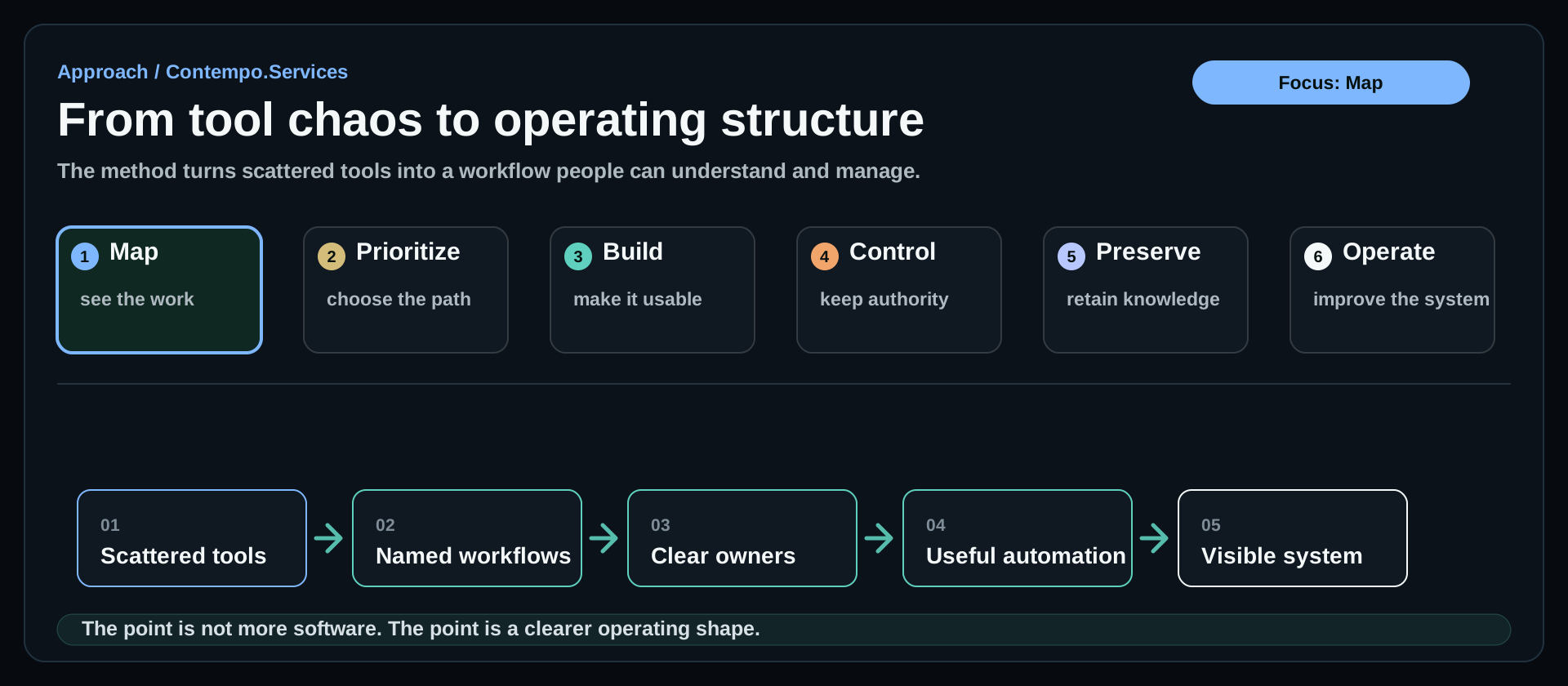
From tool chaos to operating structure
The approach turns scattered activity into an owned system with review, records, and improvement.
Method
Discover
Clarify business goals, current systems, workflows, risks, constraints, and management needs.
Map
Turn scattered tools, pages, vendors, documents, prompts, and processes into a visible operating picture.
Architect
Define the AI role, data boundaries, human review, governance, integration, and reporting model.
Build
Create the workflow, agent, documentation, automation, knowledge structure, or implementation roadmap.
Train
Document usage, review points, escalation paths, and ownership so the system can survive real adoption.
Optimize
Measure, tune, expand, and retire weak patterns as the system matures.